
DEXA bone density scan
Bone density scanning for the early detection and monitoring of osteoporosis — quick, painless and with a very low radiation dose.
Good to know
Appointment required
Book by phone:
+43 5442 64404
Current waiting time
Current waiting time for routine appointments: approximately 2–3 weeks.
Uses
When is this examination used?
DEXA bone density scanning is used to detect osteoporosis early and monitor it. We routinely measure the lumbar spine and hip or femoral neck to assess your individual fracture risk, including during treatment. We also calculate the FRAX score to estimate your ten-year fracture risk. The examination is particularly important for women after the menopause, patients on long-term corticosteroids and anyone at increased risk of fractures.
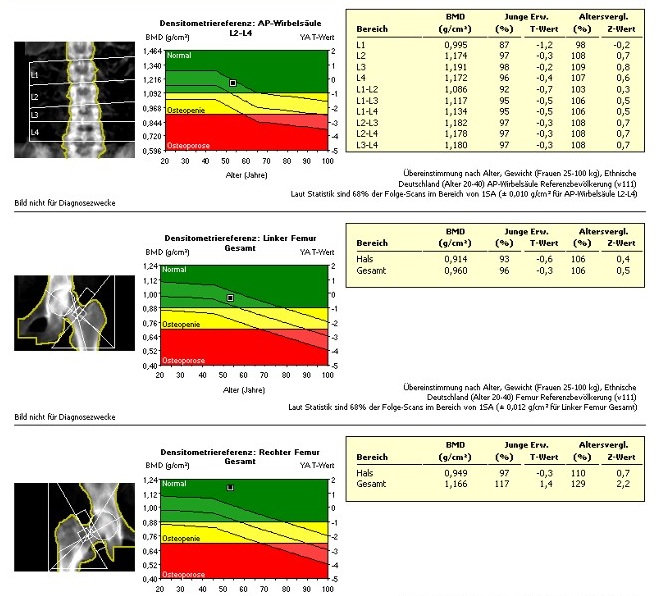
Figure: DEXA scan of the spine.
What happens during your examination
Frequently asked questions
What happens during the scan?
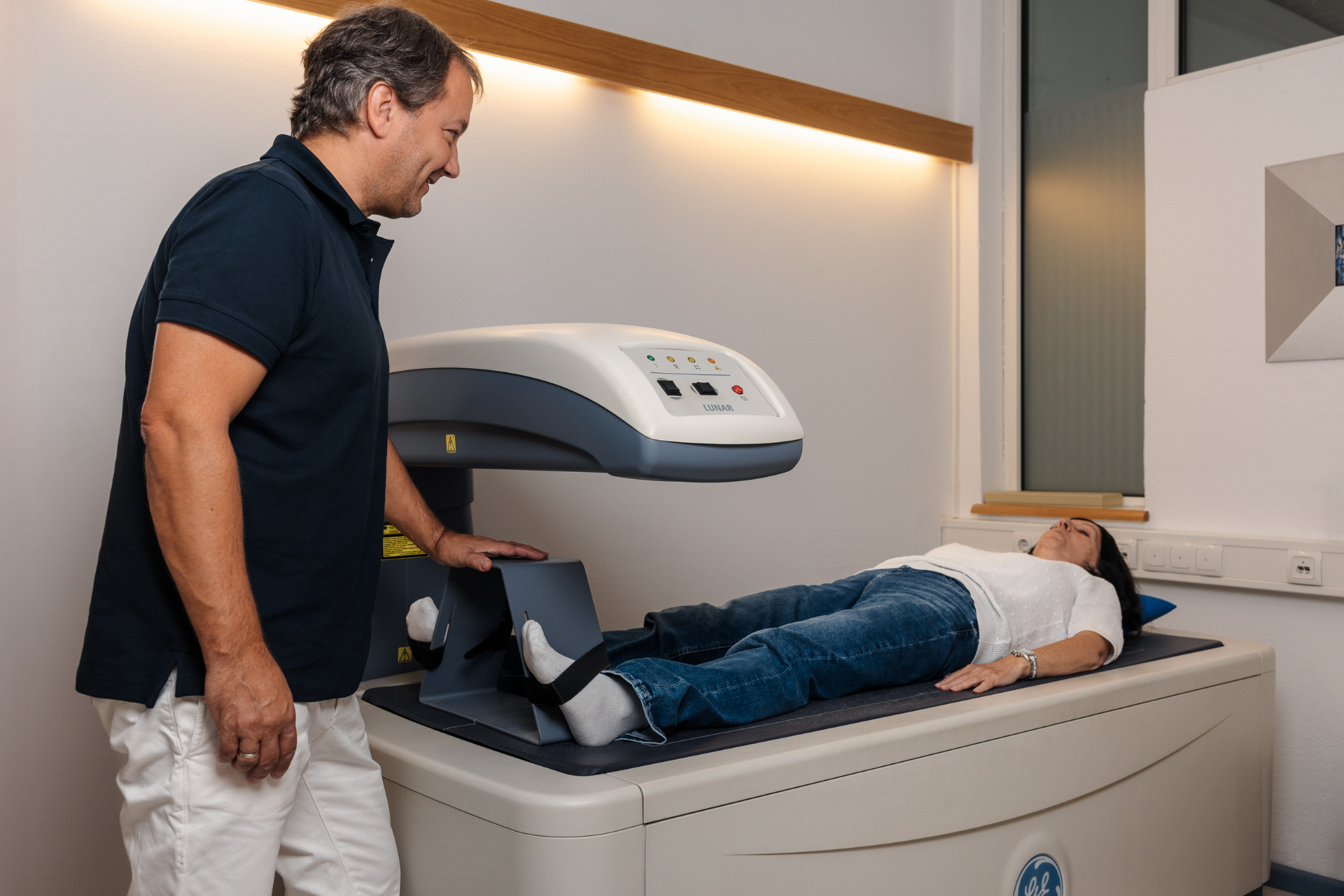
You lie comfortably on a couch while a scanning arm moves over your body. The entire scan takes only a few minutes.
How often should the scan be repeated?
Usually every one to two years, depending on the findings and any treatment. We will advise you individually.
Does this examination involve radiation?
Yes, but the dose is very low – significantly lower than for a chest X-ray.
Is this examination painless?
Yes, the scan is completely painless. You lie comfortably on a couch, without an enclosed tunnel or knocking sounds.
How should I prepare for this examination?
No special preparation is needed. Please wear comfortable clothes without metal parts in the area being scanned.
Common examinations
- Screening after the menopause
- Long-term corticosteroid treatment
- Fractures following minimal trauma
- Family history
Our equipment
DEXA bone density scan
- Very low radiation dose
- High precision
- Painless scan in just a few minutes
Our other examinations
Magnetic resonance imaging (MRI)
Cross-sectional images without X-ray radiation. Our 1.5-tesla scanner provides detailed images of soft tissues, joints, the spine and the brain.
Computed tomography (CT scan)
High-resolution cross-sectional images. Our 64-slice CT scanner enables a substantially reduced radiation dose and short examination times.
Digital mammography
Breast screening and diagnostic assessment using our direct digital mammography system with a reduced radiation dose.
Digital X-ray
An established diagnostic imaging technique for the lungs, bones and joints — fully digital and low-dose. No appointment needed.
Ultrasound
A radiation-free examination of organs, blood vessels, the thyroid and soft tissues using a high-resolution, advanced ultrasound system.